Jump to content


Photo

How to strip old paint using purple power.


9 replies to this topic

#1 481IceDragon

481IceDragon

    Member

  • Members
  • 245 posts

Posted 11 February 2013 - 11:09 PM

Im going to update this topic every once and a while while the blaster is soaking, and describe whats happening, and take photos if any visible change is made.

So here's what you'll need
-1 gallon purple power cleaner-degreaser.
-Tub to hold your liquid.
-Whatever you're stripping.
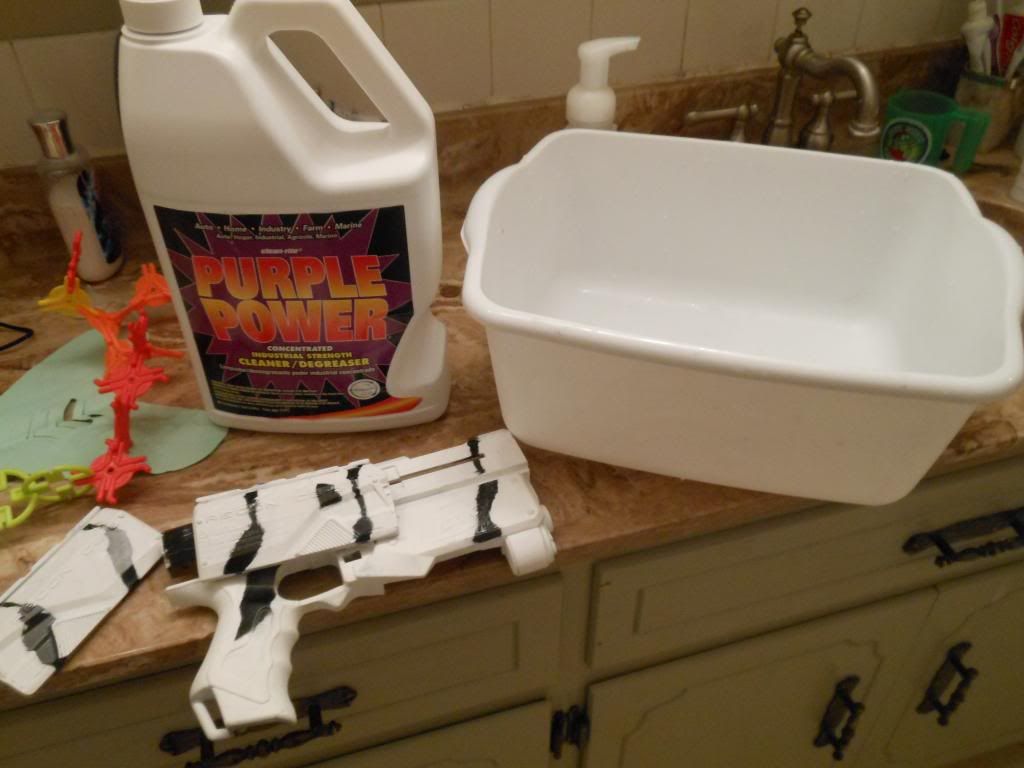
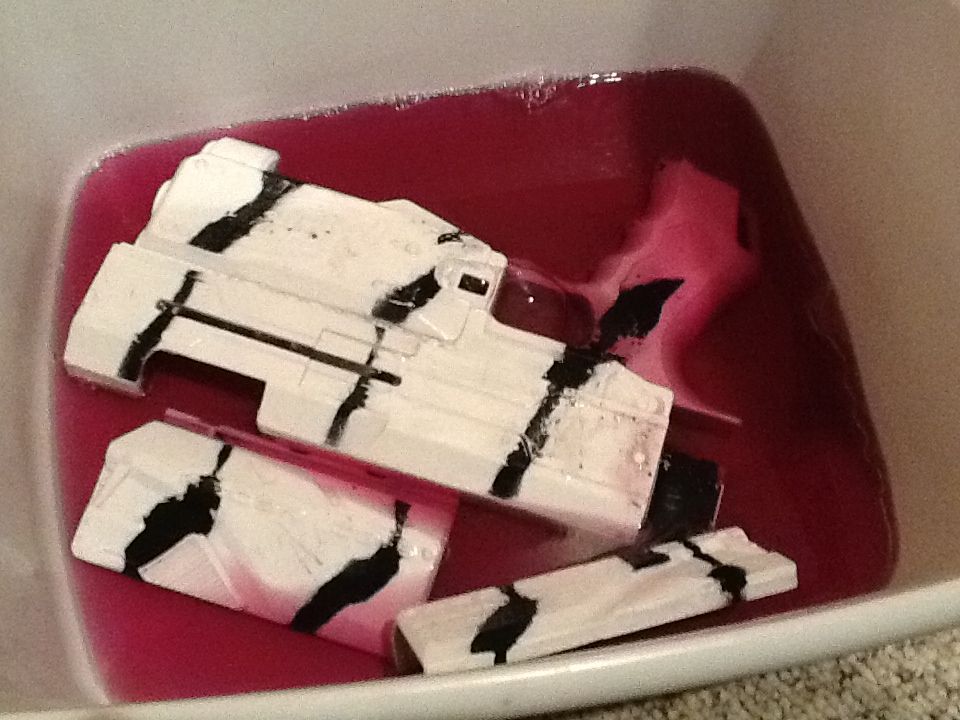
Posted Image

Throw your object of choice in your tub of choice.
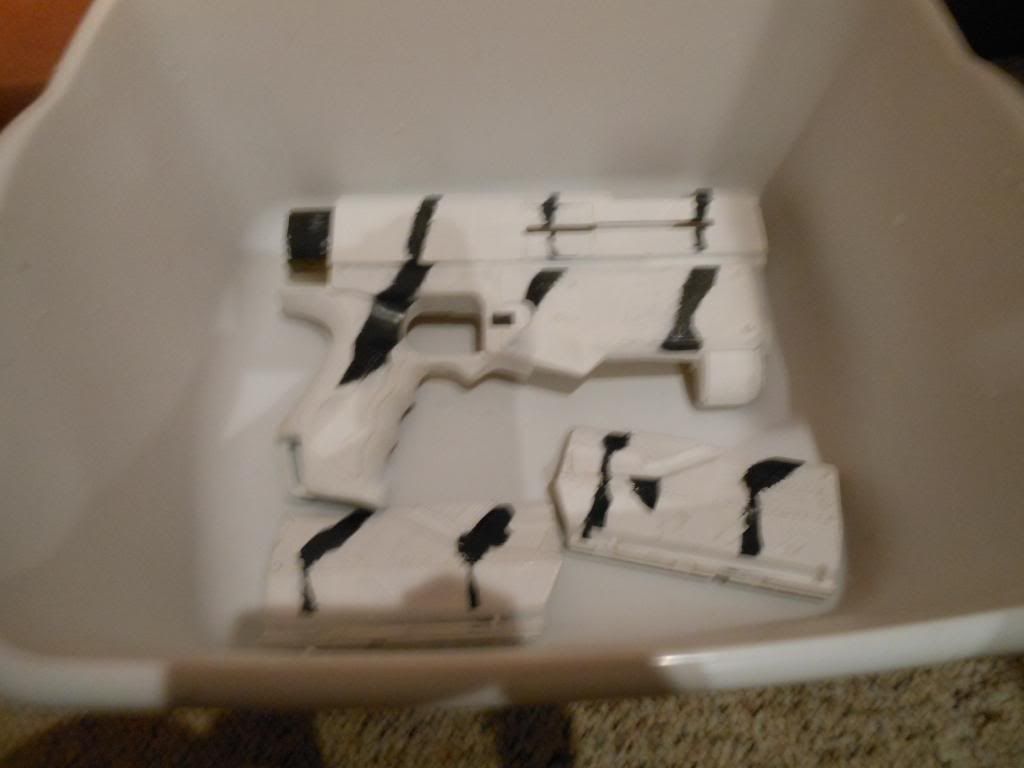
Posted Image

Now fill the tub with enough so that the blaster is juuuuuust submereged.(self explanatory, Dont really need a picture for that..) If your blaster is mainly flat, you can flip it painted side down, and use slightly less PP.


45 minute update. The acrylic touch up paint I smothered this blaster in two years ago is mostly gone, and the krylon fusion white, and black is now feeling tacky, as if still curing from a very thick coat of fresh paint. No visible change yet.

1 hour update. the paint is slightly tackier, and can be moved around with a sharp pointed object.

Edited by 481IceDragon, 11 February 2013 - 11:10 PM.
  • 0

#2 DartSlinger

DartSlinger

    Member

  • Members
  • 222 posts

Posted 11 February 2013 - 11:27 PM

Very interesting. Does the Purple Power eat into the tub or the plastic on the blaster? And what are the ingredients/solvents? Perhaps some of the solvents used in this could be purchased in pure form to create a faster working, more potent paint remover.
  • 0

#3 481IceDragon

481IceDragon

    Member

  • Members
  • 245 posts

Posted 12 February 2013 - 12:10 AM

Very interesting. Does the Purple Power eat into the tub or the plastic on the blaster? And what are the ingredients/solvents? Perhaps some of the solvents used in this could be purchased in pure form to create a faster working, more potent paint remover.


Well as for the solvents in it, I'm not sure... Ill have to check.

But does it eat into the plastic, No. At least not in any situations I have ever seen. This is used alot for stripping painted model cars and such, and Im sure if it ruined any of the detail that goes into those, It would not be used. And Honestly Im not sure you would want more potency..something that can eat through and weaken 5 THICK coats of 2 year old cured, and enamel, or lacquer,(I forget which), clear coated paint, is plenty strong for me. Any stronger and I think you Would run into problems with dissolving the plastic.
  • 0

#4 Carbon

Carbon

    Contriberator

  • Moderators
  • 1,894 posts

Posted 12 February 2013 - 04:33 PM

I know you're excited to post, but seriously: wait until you've finished, and then post results. We don't want work logs, we want write ups of how to do things.
  • 0
Hello. I am Indigo of the Rainbow Clan. You Nerfed my father. Prepare to die.

#5 481IceDragon

481IceDragon

    Member

  • Members
  • 245 posts

Posted 12 February 2013 - 05:13 PM

I know you're excited to post, but seriously: wait until you've finished, and then post results. We don't want work logs, we want write ups of how to do things.


Alright. Sorry..I thought it would be better to do it kind of "live".l it's not that I'm excited to post...it's just there isn't really a whole lot to explain of how to do... You basically just put it in and let it soak.
  • 0

#6 Carbon

Carbon

    Contriberator

  • Moderators
  • 1,894 posts

Posted 13 February 2013 - 12:20 PM

So, nothing happened in the past two days? Still no photos of how the pain behaves when it soaks, what it looks like when it's ready, if the paint completely comes off after soaking, if it requires any additional cleanup, etc. Yes, the instructions are "let it soak", but yet again you've shown us nothing beyond what a Google search would have.

..it's just there isn't really a whole lot to explain of how to do... You basically just put it in and let it soak.

And if you weren't going to add anything more to the conversation, don't make a thread about it. Closed.

Edited by Carbon, 13 February 2013 - 12:22 PM.

  • 0
Hello. I am Indigo of the Rainbow Clan. You Nerfed my father. Prepare to die.

#7 481IceDragon

481IceDragon

    Member

  • Members
  • 245 posts

Posted 13 February 2013 - 10:44 PM

so after 70 hours or so of soaking, there isn't really a whole lot of change as you can see. You CAN see though, bits of flakes of paint, floating in the liquid.
Posted Image

I noticed the black stripes, which is spray paint, and the white, which is also spray paint but was brushed over with acrylic, have different textures. Further research seemed to point out that acrylics are less susceptible to this Chemical. After another 24 hours I am going to remove the blaster from the liquid, and wash off the acrylic as best as possible.

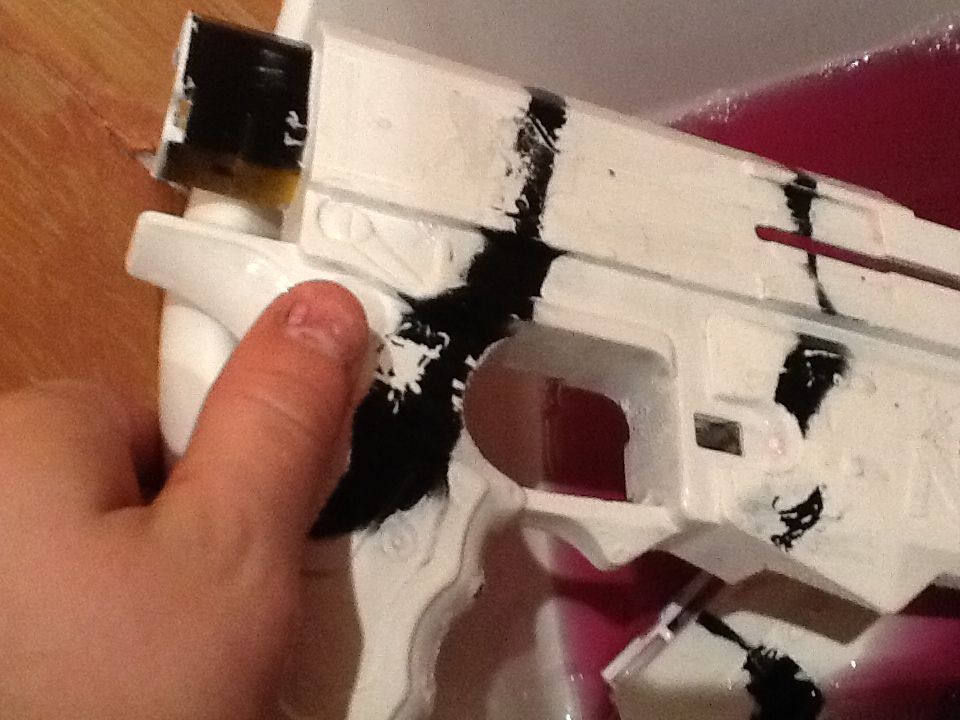
The black has started to flake of also as shown here. Put my thumb in there as a scale I guess. Word to the wise, this stuff HURTS if it gets in your skin Posted Image

Also I found out the chemical or solvents (whatever tickles your fancy) used in this are: Water, Sodium Silicate, EDTA, 2 butoxyethanol, and I can't make out the last word.

Hope this gives you some more information on this.
  • 0

#8 DartSlinger

DartSlinger

    Member

  • Members
  • 222 posts

Posted 14 February 2013 - 01:23 AM

Since the paint is all mushy from soaking, I suggest using a putty knife to scrape it off on the flat parts, and use steel wool to get in the crevices.
The main thing in the Purple Power that's removing the paint is the 2-Butoxyethanol. It is an organic solvent used for many common applications such as degreasers, paint solvents and cleaners. It seems to be mostly softening the original paint instead of dissolving it, though. Here are some suggestions.

If it is spray paint (most are oil based):

Next time, instead of using Purple Power, I suggest using nail polish remover or concentrated acetone lower than 100%. Apply some; wait two to five minutes; and attempt to scrape off the paint with a putty knife. I suggest using steel wool to get into the crevices. If that doesn't work, try leaving it for ten minutes and then scraping the paint off. If that doesn't work, try 100% acetone.

If it is water based paint:

I suggest using denatured alcohol, waiting a few minutes, and scrubbing it off with a cloth.

This is also a very useful thread on solvents. I hope all this helps.

Edited by DartSlinger, 14 February 2013 - 01:33 AM.

  • 0

#9 481IceDragon

481IceDragon

    Member

  • Members
  • 245 posts

Posted 14 February 2013 - 02:29 AM

Since the paint is all mushy from soaking, I suggest using a putty knife to scrape it off on the flat parts, and use steel wool to get in the crevices.


Well the only part that's actually mushy, is the acrylic pant, which would probably come off of I put under my sink. But the black spray paint is hard, but flaking off.
  • 0

#10 481IceDragon

481IceDragon

    Member

  • Members
  • 245 posts

Posted 18 February 2013 - 09:12 PM

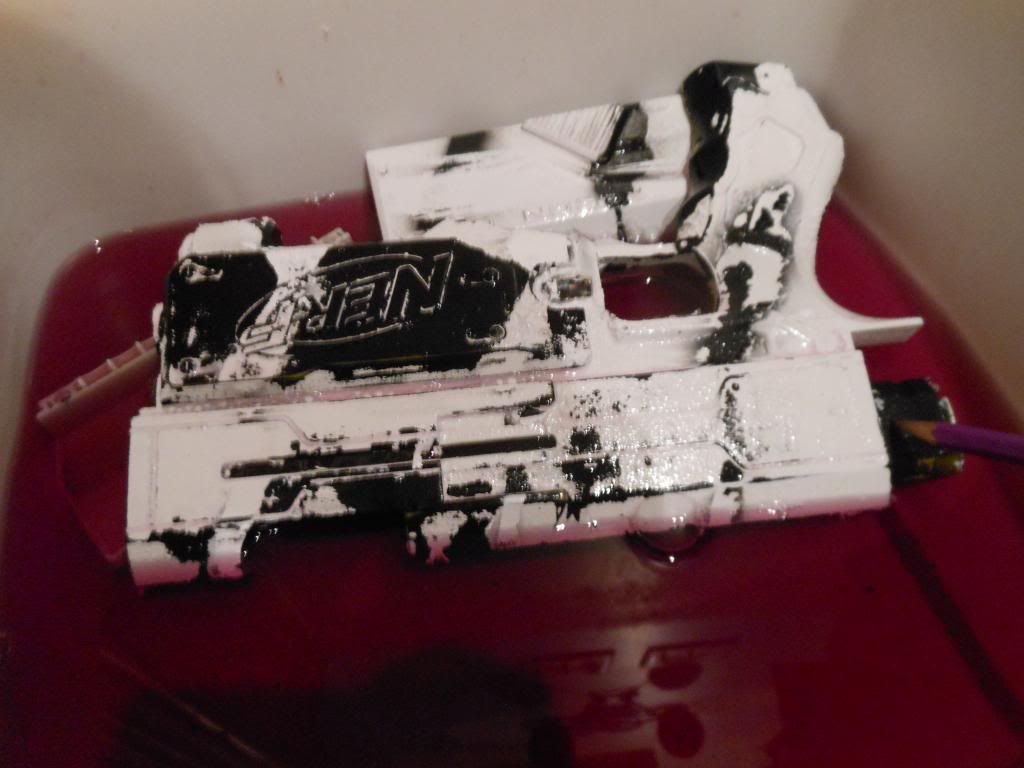
So as of two days ago, I blasted the blaster shell with our wash sink, and ALL of the acrylic paint came of in one or tow big pieces. This had been preventing the spraypaint underneath to be affected. As you can now see, we no longer have that problem. this is EXACTLY two days and 24 minutes and 5-ish seconds after i washed off the acrylic.
Posted Image


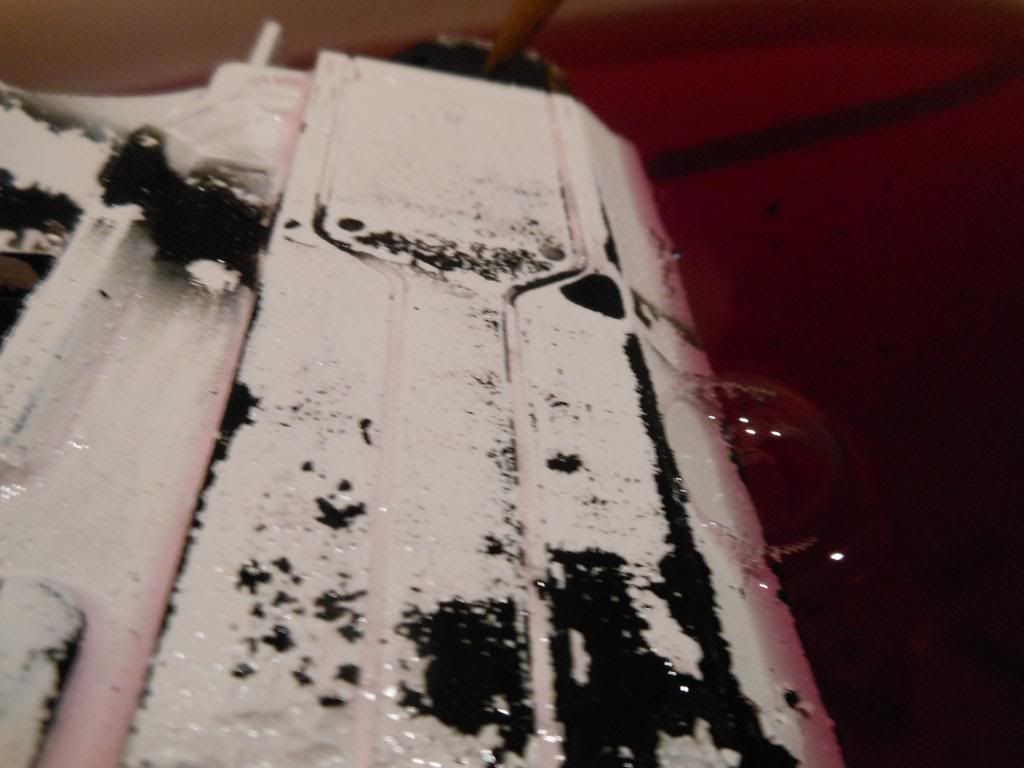
you can see how bubbly this is. I will let it sit until 9:30 central time, and I will see what more I can blast off of it.
Posted Image

Edited by 481IceDragon, 18 February 2013 - 09:13 PM.

  • 0


1 user(s) are reading this topic

0 members, 1 guests, 0 anonymous users